The Sasanians of ancient Iran (224–651 CE) went by land as far as Greece in the West and North-western India, in the East. By the 6th century, and well before the Arab invasion, they sailed to India’s western shores for trade, proceeding even further eastwards to China. In fact, Iranian contact with India goes much […]
Tag: Zoroastrian scholar
Kissah-e-Sanjan and the Sixteen Sanskrit Shloka
The ‘Kissah–e–Sanjan’ or the ‘Story of Sanjan’ was originally written in Persian at the close of the sixteenth century (1599) by Mobed Bahman Kaikobad, the grandson of Dastur Hormazdyar Sanjana, and the granduncle of Darab Hormuzdyar, the compiler of the well- known collection of Revayets compiled in the seventeenth century in India. Its importance arises […]
Celebrating The Life Of Asho Zarathushtra
Roj Khorshed of Mah Dae is observed by Parsis following the Shahanshahi calendar as Zarthosht no Deeso – the day on which Asho Zarathushtra passed away from this material world to the spiritual world. Interestingly, the community does not observe this day with sadness. Instead, it is observed with celebration of a life that was […]
Daheshna-e-Dadar Ahura Mazda!
– Gratitude for the Bounty and Gifts of Ahura Mazda – Sharing the bounties of Ahura Mazda with gratitude and in harmony with others is essential for keeping one’s soul aligned with Asha (truth, righteous conduct and cosmic order). Gratitude and giving is the essence of the holy month of Dae which commenced on 12th May (Shahenshahi) […]
Evolution Of Offering To Sacred Ritual Fires
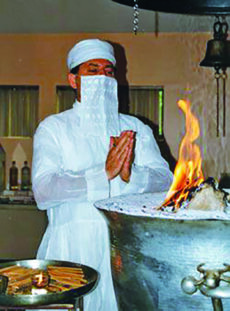
Offering of fuel or fragrance to fire is a widespread religious practice in many religious traditions across the world. Offering fragrant firewood or incense to the fire is an act of purification and transformation linking one’s senses to the Divine and fire acting as a mediator that carries offerings upward. However, in many ancient traditions, […]
Parsi Presence In Hong Kong
Last week I was in Hong Kong to attend an Asian conference. When a Parsi friend heard that I will be in town, I was invited for dinner at the Kowloon Cricket Club situated in the Jordan area of Kowloon. The first thing I noticed on entering the club was the bust of a Parsi […]
Homage to Adar – The Divinity of Light & Life
As per the Shehenshahi calendar, the holy Adar month has already commenced and tomorrow will be Roj Daepadar, observed as ‘Chulah nu varas’ or the birthday of the hearth fire, and next day will be Roj Adar, observed as Atash nu Parab or the birthday of fire. The term Adar is derived from Pahlavi Adur […]
Govad – The Good Wind
Govad Yazata is the Zoroastrian Divinity who presides over wind and air. The name Go-vad (good wind) is the altered form of Vaad or Vaat which means wind. In Pahlavi texts, Govad is called Wae-i-Weh, meaning ‘the good wind,’ interpreted as a gentle breeze that is beneficial to life, rather than a destructive storm. There […]
Resurrection – The Promise Of New Life, New Possibilities
Sunday, 5th April, 2026 is ‘Easter’ or ‘Resurrection Sunday’, celebrates the resurrection of Jesus from the dead on the third day of his burial, after his crucifixion by the Romans, at Calvary in 30 AD. The traditional narrative of the Resurrection provides hope and strength, encouraging individuals to rise above adversity and live in a […]
Significance Of The Vendidad
A Parsi Times reader recently asked whether the Vendidad is a philosophical poem like the Gatha or prose enshrining an ancient ‘Zoroastrian Penal Code?’ He also wanted to know if it was simply a textual commentary or a sacred religious ritual? Finally, he was curious about why it is performed after midnight and considered as […]
Usher Navruz (New Day) With Hope For Peace And Happiness!
Today, 21st March, 2026 is Navruz – officially the first day of Spring, a time when Nature reawakens in the Northern hemisphere, characterized by blooming flowers, blossoming trees, warmer weather and longer days. It signifies a period of renewal, new life and increased activity for animals, often marked by the melting of snow and the arrival […]